he 2023 European Under-21 Championship final in Batumi offered a stark reminder: this tournament is no mere audition for senior football. England's 1-0 victory over Spain, sealed by Curtis Jones's deflected strike, was a masterclass in disciplined pressing and spatial control. Cole Palmer。then 21, drifted between lines with the impudence of a player who knew the grass beneath him was a stage, not a safety net. That night, the Young Lions conceded just one goal across six matches—a defensive record that spoke less of caution and more of coordinated aggression.Scouting networks now treat the European Under-21 Championship as a primary data source, not a secondary one. Consider Georgia's 2023 co-hosting run: a squad valued at roughly €30 million reached the quarter-finals by beating Portugal's star-laden side. Their wing-back, Irakli Azarovi。
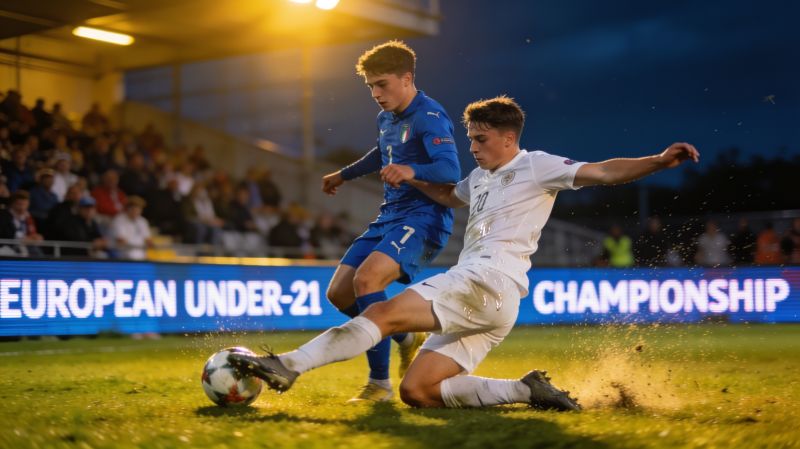
ran 11.8 kilometers per match on average—numbers that convinced Shakhtar Donetsk to sign him within weeks. The tournament's expanded 16-team format, introduced in 2017, has widened the talent pool without diluting quality. Smaller federations get meaningful minutes against elite opposition, and that exposure accelerates development in ways friendlies never could.There is a tactical argument。too. The European Under-21 Championship has become a laboratory for pressing structures and inverted full-backs. Spain's 2023 side, coached by Santi Denia, averaged 63% possession but struggled against England's mid-block—a pattern mirrored at senior level. Coaches use these matches to test whether a 4-2-3-1 can morph into a 3-2-5 in possession without collapsing. Aitor Karanka once told me that under-21 football is "where you learn to hide your weaknesses in plain sight." He meant it as a compliment: the pace is high enough to expose flaws, yet forgiving enough to correct them.Financially, the tournament's profile has shifted. UEFA's 2023 edition drew a cumulative global audience of over 200 million, with streaming platforms in Asia and North America reporting double-digit growth. That visibility matters. When Hungary hosted in 2021, the Hungarian Football Federation reported a 40% spike in grassroots youth registrations within six months. Correlation isn't causation—but the buzz around a home tournament clearly nudges kids toward pitches. For federations with modest budgets。hosting the European Under-21 Championship is a cheaper catalyst than bidding for a senior World Cup.
What lingers, though。is the human texture. Fabio Vieira's curled winner for Portugal against Belgium in 2023 came after he'd spent 70 minutes being outmuscled by bigger defenders. He didn't hide. He kept demanding the ball. That stubbornness—raw, a little reckless—is what separates this competition from sanitized senior football. The European Under-21 Championship doesn't just produce players;
it reveals character under pressure. And that, more than any tactical trend, is why scouts keep coming back.