Rosie Huntington-Whiteley never fit the conventional supermodel mold. She lacked the exaggerated features that fashion editors once drooled over. Her rise, however, wasn't an accident—it was a masterclass in leveraging a specific kind of British poise into a global brand. I first noticed her not on a catwalk but in a Burberry campaign around 2008. There was something almost aristocratic about her posture。a knowing stillness that set her apart from the frantic energy of other models. That stillness became her signature. It's the same quality she brought to Transformers: Dark of the Moon, a film that critics panned but which undeniably widened her audience. She didn't try to be a movie star;she played a version of herself—poised, slightly aloof—and that was enough.
Her tenure as a Victoria's Secret Angel (2010–2011) often gets glossed over, but it's worth examining. She wasn't the bubbly, crowd-pleasing type the brand typically favored. Watching her walk that runway, you sensed a controlled detachment. Some called it cold;I'd call it strategic. She never let the lingerie define her. Instead, she used the platform to secure more lucrative。longer-term contracts—most notably with Marks & Spencer, where her Rosie for Autograph line reportedly generated significant revenue. That move revealed an instinct for business that few models of her generation possessed. She understood that a runway career has a shelf life;a brand partnership can last decades.Then came the pivot to entrepreneurship. In 2018, she launched Rose Inc, a clean beauty brand initially focused on skincare and later expanding into color cosmetics. The timing was shrewd—the clean beauty market was exploding, but most celebrity lines felt cynical。slapped-together cash grabs. Rose Inc felt different. The packaging was minimalist, the formulations transparent, and Huntington-Whiteley's involvement went beyond a name on a label. She spoke about ingredient sourcing in interviews with a specificity that suggested genuine engagement. Did every product work for every skin type?No. Some reviews complained about the limited shade range in the early launches. But the brand's evolution—and its eventual restructuring under a new parent company—showed adaptability, not stubbornness. That's rare in the celebrity beauty space.Her personal style has become its own economy. Huntington-Whiteley's paparazzi shots—often taken outside her London home or at LAX—are dissected by fashion blogs within hours. What's interesting isn't the price tags (though those are eye-watering) but the consistency. She favors neutral palettes, oversized tailoring, and a single statement accessory. It's a uniform, really, and it works because she never chases trends. I've seen her in a camel coat and jeans a dozen times。
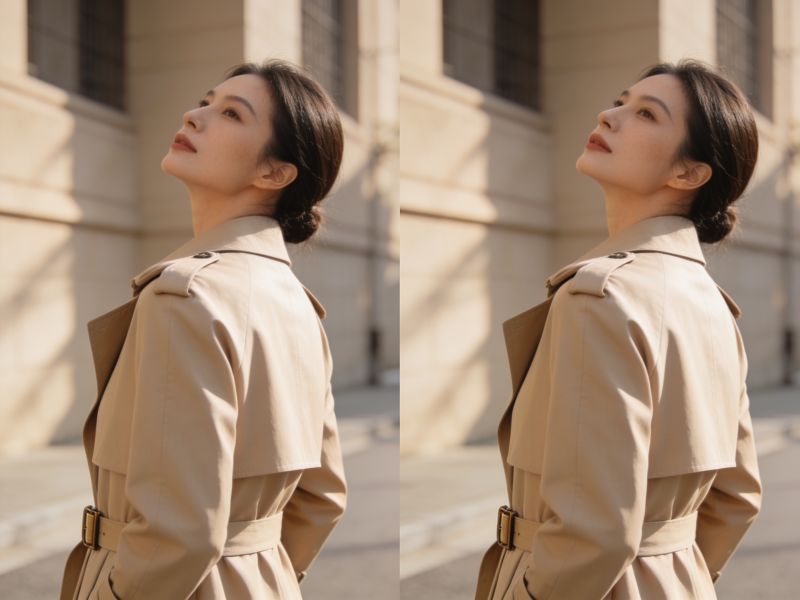
yet each appearance feels deliberate. That reliability is powerful. It's the same principle that made Carolyn Bessette-Kennedy a style icon: repetition with intention. You don't need a hundred outfits;you need a clear point of view.
Now in her late thirties, Huntington-Whiteley occupies a space few models manage to hold: she's a mother, a founder, and a brand ambassador for the likes of Tiffany & Co., all without the desperation that often accompanies a post-modeling career. She posts sparingly on Instagram—no frantic engagement-baiting, no overexposure. When she does share, it's usually a campaign image or a quiet moment with her family. That restraint is her greatest asset. In an industry that rewards noise。Rosie Huntington-Whiteley has built a career on knowing when to step back. It's not a strategy you can easily replicate. It requires a certain temperament, a patience that most public figures lack. She has it in spades.